
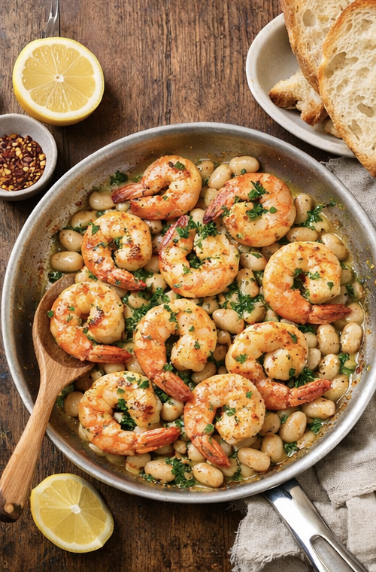

Have a can of white beans don’t know what to cook with them? Enter this recipe. This is the kind of meal you make when you want something a fast and high-fiber dinner but with restaurant-level finesse. There’s nothing like cooking a meal and being able to say it’s truly beautiful, but that’s a reality with this dish. Shrimp cooks in minutes, white beans make it filling, and the whole thing comes together in one pan with pantry ingredients. This is a meal that feels way more fussy than it is with ingredients you probably have on hand.
The key here is treating the shrimp and beans differently. Shrimp need high heat and very little time; beans need a minute to soak up flavor. If you cook them the same way, you end up with rubbery shrimp and tasteless beans. No thank you!
If you buy shrimp with tails, you have the option to cook the shrimp with the tails on and remove them while eating (or don’t! the shells are edible, so no judgment here). You also have the option to keep the shells and make a shrimp stock. I’ve detailed that below.
Benefits of a High-Fiber Diet
- Supports Digestive Health: Dietary fiber helps keep digestion regular by adding bulk to stool and feeding beneficial gut bacteria. This can reduce constipation and support overall gut health.
- Helps You Feel Full Longer: High-fiber foods slow digestion, helping you feel satisfied after meals. This can naturally reduce overeating without strict calorie counting.
- Supports Heart Health: Soluble fiber can help lower LDL (“bad”) cholesterol, which plays a role in long-term heart health. This isn’t about cutting foods out, but more about adding more of the good stuff in.
- Helps Regulate Blood Sugar: Fiber slows how quickly sugar enters your bloodstream, which can help prevent energy crashes and big blood sugar spikes — especially when meals include carbs.
- Makes Weight Management Feel Less Like Work: Because fiber helps you feel satisfied, meals tend to be more balanced and filling — without needing to micromanage portions or calories.
- Feeds a Healthy Gut Microbiome: Some fibers act as prebiotics, meaning they feed beneficial gut bacteria that support digestion, immunity, and overall health.
What You Should Cook This In
Use a 12-inch skillet, preferably stainless steel or cast iron.
- Stainless steel is ideal here because it lets you control browning and builds fond (those little browned bits = flavor for the beans).
- Cast iron also works well, especially if it’s well-seasoned.
- Avoid nonstick if you can — you’ll miss out on flavor development, and garlic browns better in a pan that actually conducts heat well.
You want enough surface area so the shrimp can sit in a single layer. Crowding the pan = steamed shrimp = rubbery texture.
If you only have a smaller skillet, cook the shrimp in two batches rather than piling them on top of each other.
What to Do with Shrimp Tails
This recipe doesn’t create much waste, but what it does create is useful!
Shrimp Tails (Don’t Throw Them Away)
If your shrimp came with tails on, save them.
Best option:
- Store shrimp shells/tails in a freezer bag
- Once you have enough, simmer with:
- Water
- A garlic clove
- A strip of lemon peel (also in this recipe!)
- Optional: parsley stems or onion ends
Simmer 20–30 minutes and strain. You now have shrimp stock — amazing for seafood pasta, risotto, or soups.
No freezer space?
You can discard them, but wrap them tightly before tossing so they don’t stink up your trash.

Garlic & Herb Shrimp with White Beans (High Fiber)
Ingredients
Method
- Pat the shrimp dry and season with salt, pepper, smoked paprika, and red pepper flakes.
- Heat 1 tbsp olive oil in a large skillet over medium-high heat. Add shrimp in a single layer and cook 2-3 minutes on one side, without flipping, just until pink and barely cooked through. Transfer shrimp to a plate.
- Reduce heat to medium low. Season the oil with a dash of salt. Add the sliced garlic and dried thyme. Cook for 45–60 seconds, stirring frequently, until fragrant and softened but not browned. Be sure to keep the heat moderate to avoid bitterness.
- Add the remaining ½ tbsp olive oil to the pan, then stir in the beans, thyme, lemon zest, and a pinch of salt. Add the wine and scrape the pan with a spatula to deglaze the pan. Add the broth and simmer for 5 minutes until the beans are warmed through and slightly creamy. Taste and adjust seasoning.
- Return the shrimp to the pan along with the lemon juice. Toss everything together for 30–60 seconds, just until the shrimp are heated through. Taste and adjust seasoning.
- Finish with chopped herbs if using. Spoon straight from the pan or serve with crusty bread to soak up the sauce.
Notes
-
Herb-forward means intentional.
This dish relies heavily on herbs for flavor. Don’t be shy with the parsley, and use the dill if you like a brighter, more aromatic finish. If you’re sensitive to dried herbs, you can reduce the thyme slightly and let the fresh herbs carry more weight. -
Keep the garlic gentle.
Cook the garlic over medium-low heat and stir constantly. Browning it will make the dish bitter and overpower the herbs. -
Shrimp cook quickly.
Searing the shrimp first and adding them back at the end keeps them tender. If they’re overcooked even slightly, they’ll turn rubbery fast. - Why the wine matters here.
The splash of white wine isn’t just for acidity—it deglazes the pan and lifts the browned bits left from searing the shrimp, which adds depth to the sauce without making it heavy. Letting the wine simmer briefly cooks off the harsh alcohol while keeping the dish bright and aromatic. If you skip it, the recipe will still work, but you’ll lose a layer of complexity. -
The sauce should lightly coat, not pool.
This recipe is meant to be lightly sauced, not brothy. If the pan looks dry, add a splash more broth; if it looks soupy, let it simmer uncovered for a minute. -
Finish off the heat.
Add the lemon juice and fresh herbs after removing the pan from the heat. This keeps the flavors bright and prevents the herbs from tasting flat. -
Serve with or without bread.
This works on its own, but a piece of crusty bread is excellent for catching the herby sauce.
FAQs
Most adults should aim for 25–38 grams of fiber per day, depending on age and sex. Many people fall short, which is why intentionally adding fiber-rich foods can make a noticeable difference.
Some of the easiest high-fiber foods to cook with include:
Beans and lentils
Chickpeas
Vegetables like broccoli, carrots, and leafy greens
Fruits like berries, pears, and apples
Whole grains (oats, farro, brown rice)
Yes — especially if you increase intake too quickly. Adding fiber gradually and drinking enough water helps avoid bloating or discomfort.
Absolutely. Beans are one of the most affordable, versatile, and fiber-rich foods you can keep on hand — especially canned beans for quick meals.
Simple swaps go a long way:
Add beans to salads, pastas, and grain bowls
Serve vegetables alongside (or mixed into) main dishes
Choose whole grains when it makes sense
Finish meals with fruit instead of dessert when you want something lighter